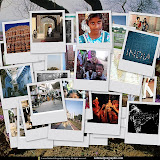
The Rise Of INDIA --- as shown on ABC news
Want to know how INDIA FEELS LIKE ?
TAKE A CHAMPION BOTTLE SHAKE IT FOR AN HOUR N OPEN IT.. U DONT WANNA GET IN THE WAY!! thats right INDIA ALL THE WAY.
Want to know how INDIA FEELS LIKE ?
TAKE A CHAMPION BOTTLE SHAKE IT FOR AN HOUR N OPEN IT.. U DONT WANNA GET IN THE WAY!! thats right INDIA ALL THE WAY.
National Anthem of India - Jana Gana Mana
Performed by Various Artists * Musicians Celebrating 50 years of Independence.
A Slide show of INDIA. Regarding this slideshow, It was displayed during India night program in my university. I did it, just to show that ... all » INDIA is not still a slumbering nation. It is filled with energetic, powerful, capable workforce and youth. It is an attempt to change the attitude of foreigners overcasted by obnoxious portraits of INDIA being created by people. (I don’t know who!!) It is also to show our people what we have achieved and what is to be achieved. I don't say it doesn't have weaknesses. But please dont avade YOUR DUTY to work for its uplift. Don't blame one another and say its impossible. TEAM WORK. POSITIVE ATTITUDE. COMPASSION. Yes! I used big words. But those are what we need. This is to imprint strongly in all of our tender minds that INDIA IS GREAT and WE WOULD MAKE IT GREATER. It is WE, who mould OUR country's future.
I just wanted to tell my feelings that led to the creation of this slideshow and also what I strongly feel to do about.
JAI HIND!!
Humble presentation at the feet of Mother India. msyamp@hotmail.com
What do the school kids in India think about Pakistan, Are we going to keep developing hatred among ourselves. If EAST and WEST Germany ... all » can become one why cant India and Pakistan.
These kids will build the dream India we want.
Check it out.
Thanks Balakarthik
its not a song
its the spirit of one nation that binds its people and
not merely a song
heartful respect towards its motherland---bharath reddy
The way it was narrated and the beautiful aerial shots of Srirangam, Tanjore and Madurai gopurams were breathtaking. When people think of southern India, they mostly think of kerala/goa. Indeed there is a lost world out there. So check it out.
The imperial british can shove their falsyfied understanding of Hinduism, their psyops and moral chastity under you know where. --- Hariprasad
This film is a journey through emerging India," the fastest growing free market democracy in the world". It celebrates the relentless ... all » spirit of the people of India, who through their karma give it a place amongst the leading economic nations of the world. Conceived and produced by Bharatbala Productions (BBP) for India Band Equity Foundation (IBEF).
GUYZ...All who love Hyderabadi Biryani... here it is watch how it is made and make it your self in your home...
Biryani is believed to have been brought to India by Taimur Lang, or Timur, the lame. The classic biryani originated in the mughal courts after they refined the dish with cooking influences from the Persian courts. The Mughal emperor Aurangzeb (1618 - 1707) brought the dish to Hyderabad when he invaded the South and installed his representatives as governors of the southern provinces. One of these governors later became the Nizams of Hyderabad.
Hyderabadi Biryani is a popular variety of Biryani. The Hyderabadi Biryani is so named as it is seen mainly in the city of Hyderabad, India. The blending of mughlai and andhra cuisines in the kitchen of the Nizam (leader of the historical Hyberabad state), resulted in a dish called the Hyderabad Biryani. It, like other biryanis, is made using Basmati rice which is only found on the Indian subcontinent. The spices and other ingredients remain the same, however the method of preparation involves more time.
Freedom fighters Bhagat Singh, Rajguru and Sukhdev have been referred to as terrorists in a textbook of ICSE syllabus, the Maharashtra Legislative Council was informed on Tuesday. "We will write to the Central government and lodge our protest," Minister of State for School Education Hasan Mushrif said during question hour.
Offences against the concerned author and publisher would be registered and cases filed within a month, the minister said in a reply to a query by Sudha Joshi and Sanjay Dutt (both Congress).
Joshi said the chapter titled `Revival of terrorism' in the 10th class book of ICSE referred the trio as terrorists.
The minister said the chapter would be expunged. Orders to the effect would be issued on Tuesday itself, he said.
The state government would also set up an independent machinery to check ICSE board syllabus, he said. The government has taken the issue seriously, he added.
Seventy-four years ago, on March 23, Bhagat Singh, Rajguru and Sukhdev, were hanged to death while fighting for India’s Independence. The three have been immortalised with history books passing on their sacrifices to successive generations.
BHAGAT SINGH
 Bhagat Singh (September 27, 1907 – March 23, 1931) was an Indian revolutionary, considered to be one of the most famous martyrs of the Indian freedom struggle. For this reason, he is often referred to as Shaheed Bhagat Singh (the word shaheed means “martyr”). He is also believed by many to be one of the earliest Marxists in India and has been labeled so by the Communist Party of India (Marxist) . He was one of the leaders and founders of the Hindustan Socialist Republican Association. Bhagat Singh was cremated at Hussainiwala on banks of Sutlej River in Punjab where Bhagat Singh Memorial commemorates freedom fighters of India.
"The aim of life is no more to control the mind, but to develop it harmoniously; not to achieve salvation here after, but to make the best use of it here below; and not to realise truth, beauty and good only in contemplation, but also in the actual experience of daily life; social progress depends not upon the ennoblement of the few but on the enrichment of democracy; universal brotherhood can be achieved only when there is an equality of opportunity - of opportunity in the social, political and individual life." — from Bhagat Singh's prison diary
SUKHDEV THAPAR
Sukhdev Thapar (15th May 1907 - March 23, 1931) was an Indian revolutionary. He is best known as an accomplice of Bhagat Singh and Shivaram Rajguru in the killing of a British police officer in 1928 in order to take revenge for the death of veteran leader Lala Lajpat Rai due to excessive police beating. All three were convicted of the crime and hanged in Lahore Central Jail on March 23, 1931Sukhdev was an active member of the Hindustan Socialist Republican Association, being one of the seniormost leaders. He is known to have started study circles at National College (Lahore) in order to delve into India's past as well as to scrutinize the finer aspects of the Russian Revolution. Sukhdev also participated in the 1929 Prison hunger strike to protest against the inhuman treatment meted out to the inmates.
Hari Shivaram Rajguru
Hari Shivaram Rajguru (1908 - March 23, 1931) was an Indian revolutionary. He is best known as an accomplice of Bhagat Singh and Sukhdev in the killing of a British police officer in 1928 in order to take revenge for the death of veteran leader Lala Lajpat Rai due to excessive police beating. All three were convicted of the crime and hanged on March 23, 1931.
Rajguru was hiding in Nagpur. He met Dr. K. B. Hedgewar and was hiding in one of the RSS worker's house. But after some days he went to Pune and later was arrested there.
For more information on the events leading up to the killing, read about Lala Lajpat Rai's death.
Lala Lajpat Rai's death
The British government created a commission under Sir John Simon to report on the current political situation in India in 1928. The Indian political parties boycotted the commission because it did not include a single Indian as its member and it was met with protests all over the country. When the commission visited Lahore on October 30, 1928, Lala Lajpat Rai led the protest against the commission in a silent non-violent march, but the police responded with violence. The police chief Scott beat Lala Lajpat Rai severely and he succumbed to his injuries later. Bhagat Singh, who was an eyewitness to this event, vowed to take revenge. He joined with other revolutionaries, Shivaram Rajguru and Sukhdev, in a plot to kill the police chief. However, in a case of mistaken identity, Bhagat Singh accidentally killed J.P. Saunders, a Deputy Superintendent of Police. He quickly left Lahore to escape the police. To avoid recognition, he shaved his beard and cut his hair, a violation of one of the sacred tenets of Sikhism.
CONSPIRACY THEORIES: MOON LANDING AND 9/11 TRAGEDY
Fox TV network aired a program called "Conspiracy Theory: Did We Land on the Moon?", hosted by X-Files actor Mitch Pileggi. The program ... was an hour long, and featured interviews with a series of people who believe that NASA faked the Apollo Moon landings in the 1960s and 1970s. The biggest voice in this is Bill Kaysing, who claims to have all sorts of hoax evidence, including pictures taken by the astronauts, engineering details, discussions of physics and even some testimony by astronauts themselves. The program's conclusion was that the whole thing was faked in the Nevada desert (Area 51). According to them, NASA did not have the technical capability of going to the Moon, but pressure due to the Cold War with the Soviet Union forced them to fake it.
Guyz...i dont know whtz truth about all these conspiracies, but one things for sure there is some thing SERIOUSLY WRONG with this country...Dylan Avery, Korey Rowe, and Jason Bermas bring you the most powerful 9/11 Documentary yet. Updated!
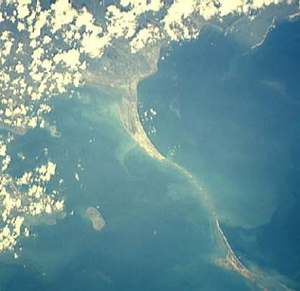
Space images taken by NASA reveal a mysterious ancient bridge in the Palk Strait between India and Sri Lanka. The recently discovered bridge currently named as Adam's Bridge is made of chain of shoals, c.18 mi (30 km) long.
The bridge's unique curvature and composition by age reveals that it is man made. The legends as well as Archeological studies reveal that the first signs of human inhabitants in Sri Lanka date back to the a primitive age, about 1,750,000 years ago and the bridge's age is also almost equivalent.
This information is a crucial aspect for an insight into the mysterious legend called Ramayana, which was supposed to have taken place in treta yuga (more than 1,700,000 years ago).
In this epic, there is a mentioning about a bridge, which was built between Rameshwaram (India) and Srilankan coast under the supervision of a dynamic and invincible figure called Rama who is supposed to be the incarnation of the supreme.
This information may not be of much importance to the archeologists who are interested in exploring the origins of man, but it is sure to open the spiritual gates of the people of the world to have come to know an ancient history linked to the Indian mythology.
[Courtesy: NASA Digital Image Collection] [Homepage: http://www.nasa.gov/]
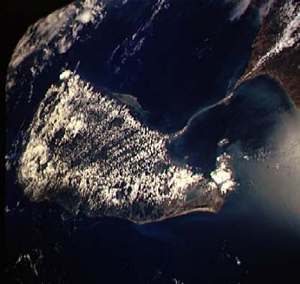
The first signs of human inhabitants in Sri Lanka date back to the Stone Age, about 1.750.000 million years ago. These people are said to have come from the South of India and reached the Island through a land bridge connecting the Indian subcontinent to Sri Lanka named Adam's Bridge. This is related so in the epic Hindu book of Ramayana.

Rama's Bridge, chain of shoals, c.18 mi (30 km) long, in the Palk Strait between India and Sri Lanka. At high tide it is covered by c. 4 ft (1.2 m) of water. A steamer ferry links Rameswaram, India, with Mannar, Sri Lanka. According to Hindu legend, the bridge was built to transport Rama, hero of the Ramayana, to the island to rescue his wife Sita from the demon king Ravana.


 1936 Indian olympic hockey team in Berlin
Asia's first Olympic gold medal was won by the 1928 Indian Olympic hockey team. After the 1928 Amsterdam Olympics, an awe-struck Dutch journalist wrote "The Indian ball seems ignorant of the laws of gravity. One of those tanned diabolical jugglers stares at the ball intently; it gets upright and remains suspended in the air. This is no longer the game of hockey. It is a juggling turn. It is splendid."
After the 1932 Olympics, the Los Angeles sports journalists voted the Indian hockey team's showing as "the most outstanding exhibition of skill in any sport in the Olympics." A cartoon published in the Evening News of India showed Dhyan Chand's stick in the form of a cobra, and Dhyan Chand whistling in front of it like a snake charmer. The Viceroy of India sent a cable congratulating the Olympic champions. It read, "I am delighted to learn of the splendid victory of our hockey team. Please give all members of the side my warm congratulations upon retaining the world championship."
In the 1936 Berlin Olympics, Dhyan Chand, who was the captain of the team, had the distinction of scoring 11 out of 38 goals scored by his side. The Fuhrer(HITLER) was very impressed by Dhyan Chand's performance in the final, where India whipped Germany 8-1 in front of 40,000 fans. At a dinner party after the final, Hitler offered to elevate Dhyan Chand to the rank of a Colonel if he migrated to Germany. Ever the patriot, Dhyan Chand turned down the offer.
Dhyan Chand was to hockey what Bradman is to cricket and Pele is to football. Dhyan Chand scored over a thousand goals in a career spanning 1926-1948. The ultimate tribute was paid to him by a sports club in Vienna, which built a statue of Dhyan Chand with four hands and four sticks. To those Viennese, no ordinary man with two hands and one stick could have played so well.
The first sporting achievement of independent India was the 1948 Olympic hockey gold medal. Over 25,000 spectators watched the 1948 Olympic hockey final between India and Britain, played at Wembley. This was the first time that India and Britain played an official hockey match, and India went on to beat Britain 4-0. That was the first time that India's national flag was displayed and India's national anthem, Jana Gana Mana, was played at an Olympic venue.
England introduced both cricket and hockey to India. While it took 20 years and 15 matches before India beat England in cricket for the first time (1952 test in Chennai), it took 37 years and 22 matches before England beat India in hockey for the first time (Britain 2 - India 1, 1985 Champions Trophy in Perth). As long as England ruled India, they never played a match with the Indian hockey team.
India has won a grand total of 8 Olympic gold medals in hockey – in no other sport has India won even an Olympic silver medal, let alone the gold. India holds the records for the largest victory margin in an Olympic final (India 8 - Germany 1 in the 1936 Olympic final), the largest victory margin in a pool match (India 24 - USA 1 in the 1932 Olympics), and the largest number of consecutive victories (30 wins on the trot from 1928 to 1960).
 In 1773, a statement to the British Parliament put the total net revenue from Bengal at £13 million. Individual East India Co staff made huge fortunes. Robert Clive, the hero of Plassey, returned home with a fortune of more than £250,000. The wealth of India was crucial for England’s industrial take-off.
”It has been estimated that the total British plunder of India between 1757 and 1815 amounted to £1000 million. The national income of Britain in 1770 was about £125 million. Direct payments alone through the East Indian Company approximated £1million in some years. The British profits from operations in the West Indies and India betwen 1760 and 1780 was probably more than double the money available to invest in new industries...”